

DrExample · MMC 00000· 6 August 2026
Laser treatment for pigmentation is one of the most effective options for addressing stubborn dark spots, melasma, and uneven skin tone. Understanding what happens after the procedure is as important as the treatment itself, helping patients protect results and support long-lasting improvement.
This article explains what to expect after laser treatment for pigmentation, how the skin heals, and how to care for the skin at home to support results.
MyClinic provides professional laser treatment for pigmentation tailored to each patient’s skin tone, pigmentation type, and treatment history. Every consultation begins with a skin assessment before any procedure is recommended, ensuring the right laser technology and parameters are selected for each case.
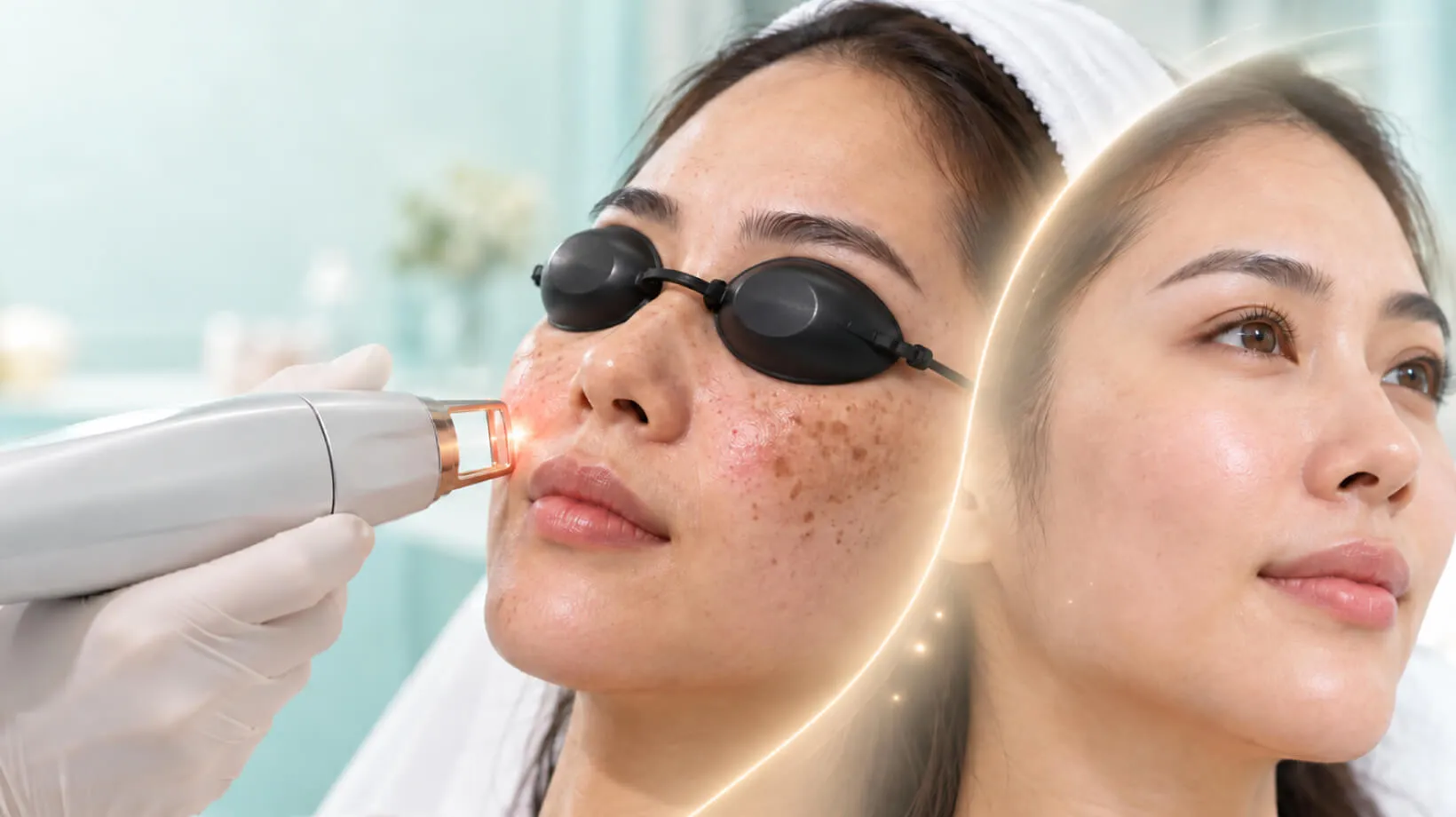
Laser treatment for pigmentation works by delivering focused light energy at a wavelength that targets melanin. The energy is absorbed selectively by pigmented cells, breaking them down so the body can clear them over the following days and weeks. Q-switched lasers are among the most commonly used, delivering energy in very short pulses that target melanin precisely without damaging surrounding tissue. Other technologies may be selected based on pigmentation type and skin tone.
The American Academy of Dermatology notes that when home treatments do not deliver enough improvement, a dermatologist can combine treatments, including prescription-strength and laser-based options, to fade stubborn dark spots more effectively.
In the hours after laser treatment for pigmentation, the targeted spots often look darker for a short time. This is a normal part of how the treatment works: the laser has brought broken-down melanin closer to the skin’s surface, where it will gradually flake off as the skin renews itself over 5 to 14 days. Mild pinkness or sensitivity can be normal during the healing process.
The skin’s response follows a broadly predictable pattern, though the timeline varies by laser intensity and individual response. In the first 1 to 3 days, treated spots appear darker as the pigment rises to the surface. Between days 3 and 7, the darkened areas begin to form a fine crust or flake. Letting this shed naturally supports healing, so avoid picking or rubbing the area.
By days 7 to 14, crusting resolves and clearer skin emerges. Full results from laser treatment for pigmentation are not immediate. As the body clears the broken-down melanin over the following weeks, improvement becomes progressively more apparent, with final results typically visible 4 to 8 weeks after the session.
Of all aftercare steps, sun protection is the most important. Treated skin is more sensitive to UV radiation, and sun exposure can trigger fresh melanin production, so protecting the skin helps your results last.
Patients should:
Sun protection is also an ongoing requirement for maintaining results long-term.
Proper aftercare makes a significant difference to how well and how quickly the skin heals after laser treatment for pigmentation. To support recovery and protect results:
Consider booking a consultation for laser treatment for pigmentation if:
Our pigmentation page provides an overview of the professional options available at MyClinic.
Most patients experience visible healing within 7 to 14 days, with darkened spots and surface flaking resolving during this period. Full results typically become apparent 4 to 8 weeks after the session as the body clears the broken-down melanin.
Laser treatment for pigmentation clears existing melanin deposits, and ongoing sun protection helps keep the skin clear. For melasma, managing hormonal triggers also helps. A maintenance plan and consistent sun protection support long-term results.
Superficial sun spots may respond in 1 to 2 sessions, while deeper or more widespread pigmentation such as melasma may require a course of sessions and ongoing maintenance. Your practitioner will outline a realistic plan during your consultation.
Yes, with the right approach. Asian skin tones respond best when laser parameters are carefully calibrated. At MyClinic, laser treatment for pigmentation is delivered with specific attention to skin tone to support safe, effective results.
Most practitioners recommend avoiding makeup for the first 24 to 48 hours while the skin is most sensitive. Once surface reactions have resolved, mineral-based makeup is generally well tolerated. Your practitioner will advise based on your specific response.
Laser treatment for pigmentation can deliver meaningful and lasting improvements to skin tone and clarity when performed correctly and supported by proper aftercare. Understanding the healing process, following post-treatment instructions, and committing to consistent sun protection are the factors that most determine the quality and longevity of results.
If you are considering laser treatment for pigmentation, the experienced team at MyClinic is ready to help. Contact MyClinic to book a consultation and take the first step toward clearer, more even skin.