

DrExample · MMC 00000· 6 August 2026
DrExample · MMC 00000· 6 August 2026
Skin that gradually loses firmness is a natural part of aging, but it does not have to be accepted without options. HIFU treatment has become one of the most sought-after non-surgical approaches for lifting and tightening the skin, and knowing when it is the right choice can make a significant difference in results.
This article explains what HIFU treatment is, who it is most suited for, when the timing is right, and what to expect from the process so you can make an informed decision.
A professional skin assessment is the best way to match a lifting option to your skin condition, age, and aesthetic goals. Rather than applying a one-size-fits-all approach, a qualified doctor assesses your skin in detail before recommending a plan that fits where you are now and the results you are looking for. At MyClinic, the focused ultrasound option to consider is Ultherapy Prime, which is covered in more detail below.
For patients weighing up the different ways to lift and firm the face, our guide to 6 common face lifting treatments sets out where HIFU sits alongside radiofrequency, thread lifts and fillers.
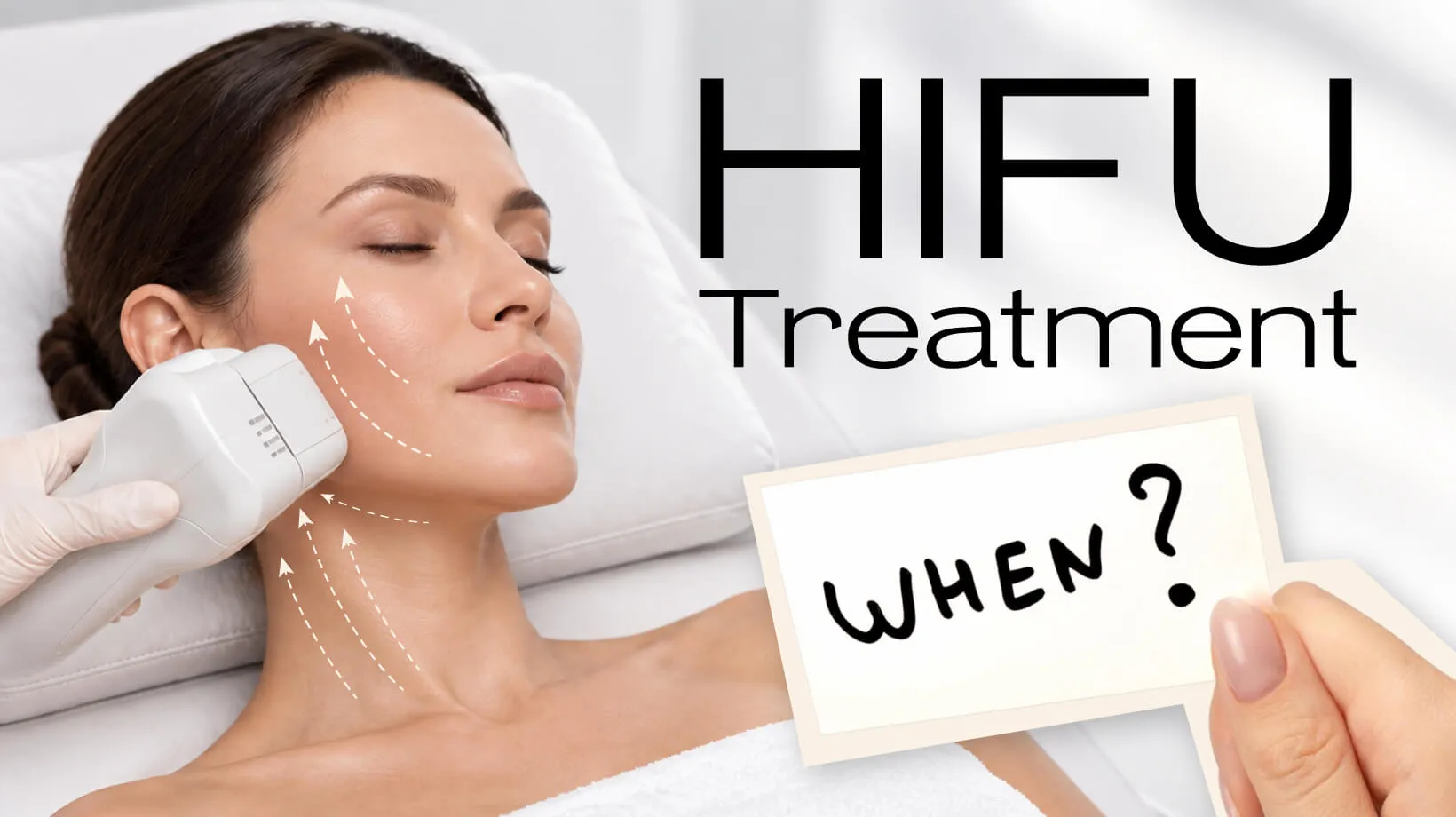
HIFU stands for High-Intensity Focused Ultrasound. It is a non-invasive procedure that uses focused ultrasound energy to target the deep structural layers of the skin, the same layers addressed in surgical facelifts, without any incisions or downtime.
The ultrasound energy heats tissue at precise depths, triggering the body’s natural collagen production response. Over the weeks and months that follow, new collagen forms and the skin gradually lifts, tightens, and firms from within. A peer-reviewed study published in the Journal of the American Academy of Dermatology found that focused ultrasound treatment produced clinically significant lifting in the face and neck for the majority of study participants, supporting it as an established non-surgical option for skin tightening.
HIFU treatment is performed using certified technology by trained practitioners, ensuring energy is delivered safely and at the correct depth for each treatment area.
HIFU treatment works best for patients within a specific profile. The ideal candidate:
Patients with very loose or heavily sagging skin may find that HIFU treatment alone does not deliver the degree of lifting they are looking for, and may benefit from a combined approach or a surgical consultation. A professional assessment is the most reliable way to determine whether HIFU is the right fit.
The most effective window for HIFU treatment is when skin laxity is in its early to moderate stages. At this point, the skin still has enough collagen infrastructure to respond well to stimulation, and results tend to be more visible and longer lasting. Starting earlier also means maintenance treatments can preserve results before significant sagging develops.
Common signs that it may be the right time to consider HIFU treatment include:
If you are noticing these changes and prefer to avoid surgery, HIFU treatment is worth exploring with a qualified practitioner. Our face lifting page outlines the range of options available at MyClinic for patients at different stages of skin laxity.
The procedure typically takes between 30 and 90 minutes depending on the area being treated. Most patients describe a warm or tingling sensation during the session, and there is no requirement for anaesthesia in most cases. There is no downtime, and most patients return to their normal routine immediately after.
Results develop gradually as the collagen-building process takes effect:
Consider having a professional skin assessment if you notice:
If any of these apply, a professional assessment is the right next step.
Ultherapy Prime is a micro-focused ultrasound treatment from Merz Aesthetics, so it belongs to the same family of treatments as HIFU and works by stimulating new collagen beneath the skin. It adds real-time ultrasound imaging, which lets the practitioner see the tissue layers and adjust where energy is placed for each area.
The signs listed above are also the ones a practitioner looks for when considering Ultherapy Prime. It is usually discussed with people who:
Because the skin’s layers are visible on screen during the session, treatment can be planned around your own facial structure rather than applied the same way to every face. People with more advanced sagging may still be advised to seek a surgical opinion.
If you recognise these signs in your own skin, you can read more about Ultherapy Prime at MyClinic and talk it through at your consultation.
HIFU treatment works best alongside a consistent daily routine. To support your skin and maintain results between sessions:
Most patients experience a warm or tingling sensation during the procedure rather than pain. Comfort levels vary depending on the area being treated and individual sensitivity, but the procedure is generally well tolerated without anaesthesia.
Many patients see satisfying results from a single session, though a second treatment may be recommended after 12 months to maintain results. Patients with more advanced laxity may benefit from a combined treatment plan discussed during consultation.
Yes. HIFU treatment targets deep tissue layers beneath the skin rather than the surface, which means it does not carry the same risk of pigmentation changes that some light or laser-based treatments do. It is considered suitable for a wide range of skin tones.
Results typically last between 1 and 2 years, depending on age, skin condition, and lifestyle factors. Maintenance sessions and a good home routine can help extend results over time.
Yes. HIFU treatment is often combined with other non-surgical options such as dermal fillers, skin boosters, or collagen-stimulating injections to achieve more comprehensive rejuvenation. Your practitioner will recommend the most suitable combination during your consultation.
HIFU treatment offers a clinically supported, non-surgical option for patients looking to lift and firm the skin without downtime or surgery. The best results come from starting at the right stage of skin laxity and working with a practitioner who can assess your skin accurately and build a plan around your goals.
If you are ready to explore what focused ultrasound can do for your skin, MyClinic offers several face lifting approaches, including Ultherapy Prime. Contact MyClinic to book an Ultherapy Prime consultation and take the first step toward firmer and more lifted skin.